The best cocktails. Cocktails and Mixes: Juice
The best cocktails
The best cocktails
The best cocktails

Classification of Cocktails

We can meet with cocktails: Appetizers (citrus), Gastrointestinal (sweet and short), Restorative (nutrients), In the afternoon, drinks (alcoholic fruit juices).

The ornament

The ornament is the detail with which presents a cocktail, despite being edible no influence on the taste thereof. Such as the slice of lemon on the edge of a glass of Caipirinha.

Preparation

The cocktails can be prepared by different processes: Built (direct), Effervescence, Flambé, Smoothies, Mixeología, macerated, Frozzen, Removed.

Decoration

The decoration of the cocktails should be stimulating and engaging, never extravagant. In general, refreshing cocktails based on fruits allow more decorative than other types of drinks. The decor is a non-edible ornament which does not affect the flavor of the cocktail

Do the cocktails without haste.

Remember to make cocktails with care and without haste, the results will be better.

Mostrando entradas con la etiqueta Juice. Mostrar todas las entradas

White Peach and Basil Margarita

Here's a little history on this cocktail - I was inspired by a drink called "Peaches and Herb" from this book (which I love and totally reccomend, btw). The original drink called for peaches, sage, and brandy, but the peach and sage combo didn't really do it for me (peaches - delcious; sage - meh), so I decided to try it with peaches and basil. And substitute tequila for the brandy, since peaches and tequila are always a winning combination. I used white peaches because - that's what they had at the grocery store. So there you go. Necessity is the mother of invention?


For starters:
5 slices of white peach (a little more than 1/4 of the peach)
3 basil leaves (harvested from the back porch!)
splash of agave nectar (what the heck is a splash, I always want to know? here's what I do: about 1/8 of an ounce.)
splash of lemon juice
1.5 oz tequila
.5 oz triple sec

What you do:
Put the peach slices, basil leaves, and agave nectar in the mixing glass of your shaker. (I'm assuming you have a boston shaker, but a plain old shaker will work just as well.) Muddle (or smoosh with the back of a spoon) the peaches and basil until they make a nice mush. Fill the glass with ice, and then add the tequila, lemon juice and triple sec. Shake it all up. (Most people will say shake until a frost forms on the shaker, but I like to shake until the shaker is so cold I can barely hold it anymore. The ice melting into the cocktail is important because that's what smoothes out the burn of the alcohol.) Strain into a cocktail glass. Cheers.

Verdict: The color is beautiful, pale and peachy, and the flavor is kind of similiar - lovely, smooth, more subtle than you'd expect from a margarita. I'd like another.

Blackberry Sage Cooler

I'm always looking for new flavor pairings, so when Page got blackberry sage tea at the black walnut last saturday, I knew what I was going to try next. I figured I'd start with gin as a base, since gin, with its mix of herby/woody flavors, usually pairs well with herbs. The result? Fantastic. But don't take my word for it.

You'll need:
4 sage leaves (from the back porch!)
6 blackberries (I bought mine at the grocery store (they're from Mexico...that's sort of local, right?), but I discovered this weekend that you can also get blackberries at the farmers' market right now.)
.5 oz simple syrup
.5 oz lemon juice (fresh squezed is best (plus squeezing lemons will make your kitchen smell awesome))
1.5 oz gin
crushed ice
club soda

Muddle the sage leaves and simple syrup together in the bottom of a mixing glass. (Muddling releases the essense of the herb into the drink. In a pinch mashing the leaves with the back of a spoon will do, but I like to use a muddler, which looks like a little bitty meat tenderizer.)


Add the blackberries and muddle some more, until the berries are mostly liquid. Add 4-5 ice cubes. Add the lemon juice and gin over the ice and stir. Strain into a collins glass. Fill the glass about halfway with crushed ice and top with a bit of club soda. (More for a smoother (more dilute) drink, less if you like booze a lot.)

Pop in a straw. And enjoy.

The Pimm's Cup

Pimm's No. 1 is a liqueur from Great Britian. It's gin-based, with lots of fruit and herb flavors up in the mix, and at 25 percent alcohol it's roughly half as boozy as say, vodka or tequila. If you did not need the above explanation you are probably a snooty mixologist type, since most people I meet have never heard of this stuff. Or you're British. Pimm's No. 1 is the essential ingredient in a cocktail called the Pimm's Cup, which is to Wimbledon what the mint julep is to the Kentucky Derby.


One night at the Black Lab, being the cocktail adventurer that I am, I ordered a Pimm's cup. It was dark brown, came in a pint glass with cucumber spear, and tasted like...well, it tasted like Pepsi. Really, guys? All that fuss about a drink that tastes like Pepsi?

So I decided to make my own. Comprised of:
2 oz. Pimm's No. 1 Liqueur
2 oz fresh-squeezed lemon juice
1 oz sugar syrup
Ginger Ale *
2 strawberries, hulled and quartered
2 cucumber slices (I got an especially twisted one from the farmers market)
2 slices green apple **
2 sprigs of mint (harvested from the back porch!)

* The Brits make their Pimm's cups with some kind of sparkling lemonade that isn't available in the states, so we have to get creative.
** I know all this fruit is starting to seem like overkill, but it's to bring out all the great fruit flavors in the Pimm's. Trust me.  


Combine all the ingredients except the ginger ale in a cocktail shaker full of ice. Shake until a frost forms on the shaker. (You don't want to shake this one too long, since the idea is for the fruit flavors to be fairly subtle.) Pour the whole thing (ice and all) into a pint glass, and top with a bit of ginger ale.

The verdict: First of all, so, so pretty. Nice and tea-colored, with all that lovely fruit floating around. I didn't know whether to drink it or photograph it. (So I did both.) As for taste: refreshing, summery, a bit unexpected, like a lemonade that's all grown up. (Cucumber definitely comes through - but in a good way, I promise.) Oh, and tastes nothing at all like Pepsi. Sorry, Black Lab.


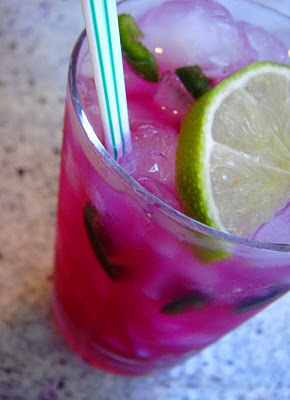
Blackberry Ginger Mojito

Fresh blackberries at the farmers market + explosion of mint in the backyard + ginger ale left over from last cocktail project = this. You're welcome.


Gather together:
7 fresh, delicious Texas blackberries
6 mint leaves
1.5 oz rum (or 2, but only if you really like rum)
.5 oz lime juice (make it fresh - your mojito will thank you)
.5 oz simple syrup (I use a simple syrup made with turbinado sugar in my mojitos - I like to think it gives them that little extra something.)
crushed ice
ginger ale

In a cocktail shaker, muddle (or smoosh with the back of a spoon) the blackberries and mint until they make a delicious minty-berry mush. Add a handful of ice and then pour in the simple syrup, rum and lime juice. Shake and strain into a tall glass. Fill the glass about 2/3 of the way with crushed ice and top with ginger ale. Add a straw and give it a little stir. At this point, if you're feeling fancy, you could garnish your mojito with a half wheel of lime and a sprig of mint. Or if you're feeling impatient you could just go ahead and drink it.

The verdict: Wow. That goes down easy.

The Bloodhound

So, now that you know all about vermouth...time to start mixing.


Dale Degroff, in his book The Craft of the Cocktail, lists a recipe for a cocktail called the Bloodhound that includes raspberries, both sweet and dry vermouth, and a prodigious amount of gin. This cocktail appeared in a lot of cocktail collections in the '20s and '30s, when people apparently couldn't get enough of vermouth (and gin). With Dale's blessing (he says it's okay to use "seasonal fruit"), I re-created this cocktail with blackberries. Yikes. It tasted like...a big old wallop of gin and vermouth. If I wanted a mouthful of gin I would be drinking a martini, already, so I set about tinkering and adjusting proportions.

I was all set to print only a version using local fruits, but at the last minute I decided to try this with the raspberries, as per the original recipe. (Raspberries and gin are good friends - a quick google search will yield lots of recipes for martinis made with gin and chambord.) At first I thought I liked the raspberry one better (embarassing, since this blog is supposed to be all about the local produce, and raspberries come from California), but the second time I tried the Bloodhound #2, I discovered, all of a sudden, an unexpected and fascinating complexity. Berries - vermouth - gin. Yes. So I struck upon an analogy - the Bloodhound #1 is a Mr. Bingley sort of cocktail. Friendly, immediately charming. Curly blonde hair, if you watched the 5-hr BBC special. The Bloodhound #2 is a Mr. Darcy sort of cocktail. Handsome, much less accessible, but with unexpected depth and charm. Jane Austen fans and mixologists alike rejoice.


The Bloodhound #1Sweet burst of raspberry on the opening note - vermouth, gin and lemon play second fiddle in a symphony of deliciousness.

8 raspberries
1.5 oz gin
.5 oz sweet vermouth
.5 oz dry vermouth
.25 oz lemon juice
splash of sugar syrup (or a bit more, to taste)

The Bloodhound #2Vermouth comes through a little more strongly in this one. The sweetness of the berries and a bit of bite from the gin and vermouth blend together into a drink that is dark, mysterious, and rewarding. If the vermouth-y taste is too much for you, you can try cutting it with a little more lemon juice and sugar syrup. Don't add too much, though (by this I mean less than 1/4 oz of each) - or that's all you'll be able to taste.

8 blackberries
1.5 oz gin
.5 oz sweet vermouth.
.5 oz dry vermouth
.25 oz lemon juice
.25 oz sugar syrup
Muddle the fruit together with the sugar syrup in the mixing glass of your shaker. Keep on muddling until you get a nice mush. Fill the glass with ice, add the gin, vermouth and lemon juice, and shake like a madman. Strain into a cocktail glass. Garnish with some berries, if you're feeling festive, and enjoy.

Pirate Berry Infusion

The original recipe for the Pirate Berry Infusion comes from this book, which has lots of recipes for infusions using seasonal fruit. Apparently this is a book is for people who really, really like drinking, because the original recipe calls for two 750 mL bottles of rum, which comes out to...a lot of rum. I'm pretty sure that with nearly 2 liters of berry-flavored rum I could make a daiquiri for everyone I've ever met in my entire life.


So I cut the recipe in half, and made a few other tweaks, too - I substituted cinnamon sticks for cinnamon syrup (mostly because...I was too lazy to make a cinnamon syrup), and I used a little bit less fruit than the recipe called for and cheated by muddling it instead. The original recipe didn't call for any muddling, which I thought was odd because, well, blueberries are not infusing into anything in any big hurry unless you help them out a little bit.

It turns out that infusions are a lot harder to make up (or tweak) on the fly than your average cocktail. (Most cocktails don't require you to invest a week and an entire bottle of liquor.) I managed to screw this one up twice - the first one was too sweet (I forgot about it and let it infuse too long - whoops), and the second one had hardly any flavor at all. (I think the berries weren't fresh enough.) Finally, on the third try, I manged to get it Just Right. 


Pirate Berry Infusion
1 750 ml bottle dark rum (I used Gosling's)
1 pint raspberries
1 pint blackberries*
1 pint Texas blueberries
1 cinnamon stick, broken in half
1 tsp fresh-squeezed lemon juice**

*These were still available locally as of the making of infusion number one...but sadly, not anymore.
**Acts as a sort of preservative, without adding any discernable flavor.

Place the cinnamon stick in the bottom of a glass jar, and layer the berries on top. Muddle the berries lightly as you add each layer - emphasis on lightly. The goal is to break the berries up a little so they release their flavor into the rum, not smash them into a paste. You'll want to muddle the blueberries the most and the raspberries the least, because they are already kind of smooshy and will succumb easily. When you're done muddling, add the rum and the lemon juice. Seal the jar and let it sit in a cool, dark location for a week, or a few days longer if you want a stronger berry flavor. You can always taste the rum to check its progress. (I'm sure you don't need to be encouraged to do this.)

Once the appropriate waiting period is finished, strain the rum into a bottle (it will be a nice cranberry color - purdy), and you're ready for:

The Pirate Daiquiri

2.5 oz pirate infusion
.5 oz fresh squeezed lime juice
.5 oz sugar syrup

Stir all ingredients together in a glass full of ice. After stirring, let the glass sit for a couple minutes - you want to make sure the ice melts into the drink a little to mellow out the booze. (Or you can use a shaker and eliminate the waiting.) Strain into a martini glass, garnish with a cinnamon stick if you're feeling fancy, and enjoy.


Verdict: Sweet and berry-licious, with just the right amount of sour from the lime and a hint of cinnamon to boot. Yum. 

Mr. Stair

I wanted to try the Mr. Stair pretty much as soon as I got my copy of Food and Wine Cocktails 2009. It's right there on the front cover, all pretty and opaque and pale green. Problem was, the recipe calls for...cucumber juice. As you can imagine, I was a little bit intimidated by this. How does one liquefy a cucumber? In the wise words of my friend Sarah, "juicing a cucumber sounds a little bit like milking a cat. Possible but uncommon and possibly unpleasant".


So I shelved my dream of a pretty green cocktail until sometime after this post, when I picked up the book again and realized, wait. I juiced a blackberry...why the heck can't I juice a cucumber? (Plus, I had just made the post about St. Germain and was pretty pumped about making cocktails with it.) Turns out the cucumber was a bit more work, but I persevered. Here's what you have to do - cut the cucumber into little bits. (And I mean little, like 1/4" cubes.) You don't need to juice the whole cucumber if you just plan on making a few drinks...about 1/3 will do. Throw them into the blender with a little bit of water (I added 1/2 oz), and start on a low setting, working your way up to higher settings until the cucumber is liquefied. Then strain the cucumber through a sieve, as described here.

Then gather together:
2 oz. Williams Pear eau-de-vie*
3/4 oz St. Germain elderflower liqueur
1/2 oz lemon juice (fresh squeezed please)
1/2 oz hard-fought cucumber juice (from a cucumber grown by some nice local farmers)
1/4 oz simple syrup
The original recipe calls for a dash of orange bitters, but I like it better without. If you have some, feel free to try it both ways and judge for yourself.

*Pear eau-de-vie is a brandy that's made from distilled pears. (As opposed to traditional brandy, which is made from grapes.) This stuff is expensive, but surprisingly versatile. It shows up here, came in handy in the St.Germain sangria, and is an essential ingredient in the pear/bourbon old-fashioned that is one of my favorite drinks. (And very likely a future post.)

Add all the ingredients to a cocktail shaker full of ice. Shake until the shaker is nice and frosty. Strain into a pretty glass.

Credit for this recipe goes to Vincenzo Marianella (at the Copa D'Oro in Los Angeles. (Actually, Santa Monica, which, as Rachel knows, is where Frank Gehry is from)). To whom I say: you, sir, are a cocktailing genius. Also, I may have to plan a trip to LA just to visit this bar.

Verdict: Very pear-y. (It's a teeny bit of a disappointment after all that work I went to, but I don't taste the cucumber at all.) Beautifully light and sweet - looks and tastes not quite like any other cocktail I've ever had.

Pink Sage

I have become the sort of person who googles things like "sage flavor pairings". Because I recently bought a sage plant, and if I can't make it into a drink it is basically useless to me. Some suggestions were: sage and plums. Interesting. Sage and rye whiskey. More interesting. But what about...sage and plums and rye whiskey? The plot thickens.

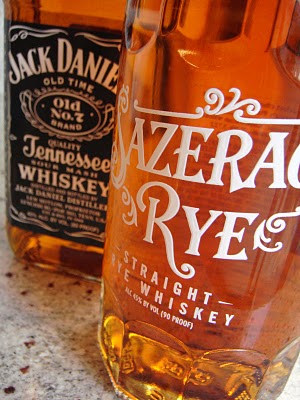
So here's what you need to know about rye whiskey: Rye whiskey (sometimes referred to simply as "rye") is kind of a big deal. It shows up in a lot of old cocktail recipes, and has recently been re-discovered by the cocktailing elite. (Apparently rye whiskey has a long and storied history - according to this guy, it was distilled by George Washington at Mount Vernon.) It tastes like whiskey but different, i.e., in rye, the spicy flavors present in the whiskey are sharper and more distinct. It practically begs to be paired with bitters, which is probably why the most famous cocktail made with Rye Whiskey, the sazerac, includes a healthy dose of Peychaud's. (Sazerac also happens to be the brand name of a kind of rye.)


I bought my first bottle of rye whiskey a couple weeks ago and set to work on a sage-y cocktail. Here's what I came up with:

The Pink Sage
3/4 of a juicy, ripe red plum
4-5 sage leaves (thank you, backyard herb garden)
.5 oz sugar syrup
.25 oz lemon juice (make it fresh!)
2.0 oz rye whiskey (2.5 if you want the taste of the rye to come through more strongly.)

Add the plum and sage to the shaker. You will want to muddle this one rather vigorously - it may help to add the sage and half the plum, muddle, and then add the rest of the plum and then muddle again. Fill the shaker with ice and then add the remaining ingredients. Shake and strain into a cocktail glass.


Verdict: Wow. This is very, very good. The plums, sage and rye are such a natural pairing that it's hard to tell where one flavor ends and another begins. It's sweet and smooth and herbal and complicated. Adding a couple dashes of Peychaud's bitters will add an interesting, licorice-y dimension to it. (Sounds weird, but - try it.) Just don't drink it too fast. Rye whiskey is almost 50 percent alcohol. I'm gonna go sit down.

The Dream Team

This week I did something very atypical, which is - I made a fantasy football team. This would seem, at first glance, to be absolutely foolhardy, since I know next to nothing about football. And seeing as the season has not actually begun yet, there are still plenty of chances for my team to be an epic failure. But, on Tuesday, with a lot of help from the football gal, I participated in my first draft, and now I've got what is (I think) a pretty decent team. I have Chris Johnson, and Steven Jackson, and Tom Brady (hot!)** and some guy named Jermichael. (As a person who strives to create cocktails which are innovative mashups of familiar ingredients - I appreciate this name.)

So, what I've learned thus far is: having a good team is really important. The other day I came across a cocktail that teamed up:
1. St. Germain
2. a margarita
3. cucumber
4. Fever Tree Bitter Lemon Soda*
*What?? This is a mixer that was recommended by loyal reader Rosann way back in the Pimm's Cup days. I had been wanting to try it.
That, my friends, is a good team. So, in (hopeful) anticipation of all the glorious beatings that will soon be delivered by my fantasy football team***, I mixed up one of these puppies.


The Escapology(from the Burger Bar in San Francisco, via sfist)
1.5 oz silver, un-aged tequila
.5 oz St. Germain
3/4 oz simple syrup
1 oz lime juice (fresh squeezed!)
4 thin slices of cucumber (farmers' market!)
Fever Tree Bitter Lemon Soda

In a shaker, muddle the cucumber slices with a splash of the simple syrup. Fill the glass with ice and add the remaining ingredients, except for the soda. Shake, strain into a glass over ice, and top with soda. You don't want to add too much soda or the drink with get too bitter. I poured mine into an old-fashioned glass with a handful of ice in the bottom and then filled with the soda, and that was just perfect.

Verdict: Sweet, summery, and delicious. Surprisingly, tastes not very much like a margarita. Tastes not very much like booze, either (although I sometimes worry that my definition of "tastes like booze" is not quite that of a normal person, since many drinks that I would describe as simply "tasty" are described by other people as "really, really strong"). Not that that's a bad thing. There's this delicate interplay of lime, cucumber and tequila flavors going on, and the soda makes it light and refreshing. With a lineup like this, it's hard to go wrong.

**Update: Tom Brady is still hot, but my gosh, what the hell is up with his hair? Get a haircut, Tom. You're embarrassing the team.
***Another Update: As of monday night, the first of these beatings was officially delivered. Cheers. 

Key Lime Margarita

Having a garden will teach you patience. You take care of the plants, and you watch them grow, and if you are lucky after a veeery long time they will produce something you can eat. Well, after many months of anticipation the three tiny, perfect key limes on my key lime tree finally ripened, and of course I started dreaming of cocktails.


The first thing I thought of was a key lime martini - Steve had one once and couldn't stop talking about how great it was, and besides, it just sounded fun. So imagine my surprise when I discovered that a key lime martini contains no actual key lime juice. (Here's a compendium of three different key lime martini recipes...no key limes in sight.) 101 Margaritas to the rescue. Right there on the front cover is a lovely picture of a key lime margarita made with real key lime juice. Problem is, the original recipe called for something called McGillicuddy's vanilla schnapps, which your intrepid bartender was unable to find. So instead I substituted Navan, a vanilla liqueur made by the same folks who make Grand Marnier. It tastes divine, is very strong, and very expensive. But it's still vanilla flavored, right? And I had been looking for an excuse to buy a bottle of this stuff anyway.

So here goes:
Key Lime Margarita
1 1/2 oz tequila*
1 1/2 oz Navan vanilla liqueur
1/2 oz key lime juice (from the garden!)
1/2 oz simple syrup
splash of Midori melon liqueur (optional)**

*I prefer the gold in this recipe. Use good tequila - trust me, you will taste the difference.
**What's the Midori for? See, the difficulty here is that people expect margaritas to be green. And while the unfindable McGillicuddy's is presumably clear, Navan is brown. Adding a splash of Midori will give your margarita the appropriate color. Just don't add too much, or it will start to affect the taste.


Before you start: to give this drink a little added pizazz, rim the glass with vanilla sugar. (This isn't necessary, but it's super easy and I heartily reccomend it.) To make vanilla sugar, combine 1 teaspoon vanilla extract with 4 tablespoons of white sugar. This will make enough sugar for at least two glasses (and it will smell incredible). Then follow the instructions for coating the rim of a glass with sugar found here.


Combine the ingredients in a cocktail shaker filled with ice. Shake and strain into a glass. Or, stir the ingredients in a glass full of ice for thirty seconds, and let the glass sit on the counter for about a minute before straining into a glass. You want to give the ice a lot of time to melt with this one, because it is veeery boozy. Navan is 40% alcohol by volume, the same as most hard liquors, so this drink has the equivalent of two whole shots in it, about twice what you would expect. (Don't say I didn't warn you.) The water melting into the drink takes the edge of the liquor - it's what makes tequila taste like tequila and not like that burn you get when taking shots.


Most cocktails are intended to be drunk chilled, without ice, but I give you permission to take this one on the rocks (since the ice will melt and further mellow out the drink). It's also a great candidate for a frozen drink. To make a frozen margarita, combine all the ingredients in a blender, and add a handful of ice cubes. Run the blender (you will probably need to use the highest setting), and keep adding a couple ice cubes at a time until you reach the desired consistency.


Verdict: This is a most interesting drink. I keep making them to drink by the pool (in October? Only in Houston), and every time I have one I like it more and more. In fact, I am craving one right now. The margarita-ness gets you right away, whereas the vanilla slowly sneaks up on you before settling gently into your palette. I have to say I'm pretty proud of myself for making something that is 75% hard liquor taste so delicious. Drink it slowly - this will help you appreciate the vanilla more. It will also keep you from ending up on the floor.

Forgotten Cocktails...OF DEATH

Good morning, campers! Time to rise and shine, because...it's Mixology Monday! This time, you get two cocktails for the price of one. This month's theme is "forgotten cocktails", with your host Rock and Rye, and both of my forgotten cocktails have these things in common:

1. Ernest Hemingway
2. The "hair of the dog"
3. DEATH.

That's right. Cocktails that will help you get over a hangover...or maybe just kill you.


Ernest Hemingway was a talented and troubled American writer who apparently had a bit of a penchant for drinking. He was known to embark on "alcoholic sprees" with James Joyce, and he gave himself a scar on his forehead by pulling a skylight onto his head in the bathroom of his paris apartment, mistakenly thinking he was pulling on the toilet chain. (Wikipedia won't tell me for sure, but if you have ever been inebriated, you might recognize this as the sort of dumbass thing a drunk person would do.) Two of Ernest Hemingway's favorite hangover cures survive, both, interestingly enough, with the word "death" in the name. 
 
First: Death in the Afternoon. Hemmingway's original directions for the drink are as follows (with thanks to esquire.com): "Pour 1 jigger of absinthe into a champagne glass. Add iced champagne until it attains the proper opalescent milkiness. Drink three to five of these slowly." Obviously, there are some problems here. 1. How much is a jigger? Jiggers come in many different measurements. 2. I am not about to drink three to five of these things. Ernest Hemingway must've had the liver of a champion.

I discovered another recipe for "Death in the Afternoon" in one of my go-to cocktail books, the Art of the Bar. This particular recipe called for a mere 1/4 oz of pastis (pernod preferred) and a full glass of champange. Esquire.com, where I found Earnest Hemingway's directions, called for a full 1.5 oz of absinthe (or the newly legalized absenthe) per flute of champange. What to do? Well, I used absenthe, because I had some on hand, left over from making my Harry Potter extra sinister, and I split the difference and put in 3/4 oz of absenthe for each glass of champagne. I feel this creates a good balance between the champagne and absinthe flavors, but if you'd prefer to add more absinthe, feel free. Earnest is on your side. I did not test out the efficacy of this drink as a hangover cure (although you might need one the morning after one too many Ron Weasleys), but I did drink it right after breakfast, which counts for something. Right?


Death in the Afternoon3/4 oz absenthe
Fill glass with brut champagne.

So...how's it taste? Some flavors are pretty shy. Absinthe (which, for the unintiated, tastes almost exactly like black licorice) is not. There is definitely something in your champagne. To my surprise, absinthe and champagne actually play pretty well together.* You get the taste of champagne, with a nice licorice-y finish that is interesting without being overwhelming. If you don't like the taste of absinthe, you will probably not like this drink. If you do...well, it may be your new favorite thing.

*I'm continually surprised by how well champagne pairs with bizzarre and sundry flavors. Like, champagne and guiness? Surprisingly not bad.
The second, and far more intimidating, hangover cure I sampled is something called Death in the Gulf Stream. The Art of the Bar book first made me aware of the existence of this Hemingway reviver; I have Seamus Harris, from Tales of the cocktail, to thank for the directions for Hemingway's original formulation:

“Take a tall thin water tumbler and fill it with finely cracked ice. Lace this broken debris with 4 good purple dashes of Angostura, add the juice and crushed peel of 1 green lime, and fill glass almost full with Holland gin. . . . No sugar, no fancying. It’s strong, it’s bitter – but so is English ale strong and bitter, in many cases. We don’t add sugar to ale, and we don’t need sugar in a Death in the Gulf Stream – or at least not more than 1 tsp. Its tartness and its bitterness are its chief charm. It is reviving and refreshing; cools the blood and inspires renewed interest in food, companions and life.“

Seamus interprets "Holland gin" to mean Genever, which is sweeter than the London dry varities; for whatever reason, Art of the Bar called for something called "Extra Dry Holand Gin", which I was unable to find at the trusty downtown Spec's, so instead I used just plain old London dry gin. I am supported in my decision by this article about the boozings of Ernest Hemingway from flavorwire.com, so that's something.

Death in the Gulf Stream (aka The Hemingway Reviver)
Crushed ice
Juice and peels of an entire lime
4 dashes of Angostura bitters
Healthy dose of Holland Gin (or extra dry Holland Gin, or London Dry...I used Broker's, if you're wondering. The bottle came with a little plastic top hat on it.)

I cut the lime into quarters, squeezed them into the glass, threw the peels in, and added the bitters and crushed ice. Then I added the gin (almost all the way to the top) and gave it a little stir.


I was very, very afraid to taste this. Notice the part where there's no sugar? And that is a lot of bitters. And a lot of booze. But: verdict:
You guys...I think I'm a total lush. I was fully prepared to taste this and report back to you that it was absolutely terrible. So certain was I of its terribleness that I almost typed the words in before even trying it. But...but...it's kind of good. The lime is bracing, the gin is refreshing, and all that bitters gives it depth...I feel a renewed interest in food, companions, and life. No, I wasn't hungover to begin with. But this drink? It's like a swift, and not entirely unwelcome, alcoholic kick in the pants.

Ernest...you old rogue. 

Kendra, here's what to do with that pesky rum

I am always happy to help a friend. And when I hear that a friend has copious amounts of alcohol and is unsure what to do with it...well, that's like a cocktail emergency. And I am like a cocktail superhero. With great power, as they say, comes great responsiblity.

Okay, this is a bit facetious. But for reals - Kendra, sojurning in the exotic land they call Germany, found herself with a surfeit of Bacardi Gold Rum. Did I have any suggestions? Well, it has been a while since my latest rum drink, but your bartender always relishes a challenge. Kendra told me she and the hubby had been making Rum n' Cokes with the confounding rum, but they tasted like medicine. Well, propitiously, I had just acquired a copy of Imbibe magazine, the one with the article about the 25 most influential cocktails of the last century. Right there, on the first page, was the Cuba Libre. I thought a Cuba Libre was the same thing as a Rum n' Coke. Not so fast!, said Imbibe magazine. The different between a Rum n' Coke is and a Cuba Libre is that a Cuba Libre has lime juice in it - and that is a big difference indeed (went the magazine). Also propitiously, I happened to have a bottle of Bacardi Gold, bequeathed to me by a certain generous friend upon her move to St. Louis. So I pulled out the Bacardi and made myself a real Cuba Libre.


Cuba Libre(with thanks to Imbibe magazine and Jonathan Philips.)
4-5 oz Coca-Cola
2 oz Bacardi Gold Rum
juice and peels of half a lime

Squeeze the lime and then drop it into the glass. (Not sure if this is official Cuba Libre protocol, but it looked pretty in the Moscow Mule so we're going with it.) Fill the glass with ice, and add the rum and coke. Garnish with a couple of lime wedges.

Verdict: The lime definitely adds a little something. I may never be satisfied with a plain old rum n' coke ever again. (Alicia tried it (right before we went for a run, which is a great time for a cocktail), and she liked it too. I'm not sure I can trust myself anymore, since I liked the Hemingway reviver.)

But I wasn't going to stop with just a dressed-up Rum n' Coke. To prove myself a master of my craft, I needed to come up with something a little more exotic. My second attempt involved pineapple juice, rum, and ginger ale. It was terrible. It is not recorded here. It tasted, as Kendra said of the original rum n' cokes, like medicine. My third cocktail was much better.

The thought process for cocktail #3 was as follows:
1. Isn't that a bag of frozen blueberries in the freezer?
2. Wasn't there some drink with blueberries and rum on the menu at the Anvil not too long ago?
3. Lori makes those drinks, the Scarlet Jos, with mixed berries and SoCo and sweet n' sour and club soda. So we know that frozen berries + booze + sweet n' sour + fizzy = Good.
4. Brown sugar + gold rum has been a winner in the past. Let's try that.
5. Ginger is one of those things (like champagne, or lemon) that inexplicably mixes well with everything. So let's get some of that up in there (because I am unemployed and I have all the time in the world and club soda is for wussies and we're gonna go CRAZY).

With all this going on, it wasn't too long until:

The Blueberry Gin Rum-yThawed (or fresh) blueberries*
2 oz Bacardi Gold rum (or any old rum)
.75 oz fresh-squeezed lemon juice
1 tbsp brown sugar
Ginger ale (or Ginger beer, if you're feeling adventurous.)
crushed ice

*If you have fresh blueberries, they will work just as well as the frozen ones. The advantage of frozen blueberries is this: 1. You can get them any time of year, and 2. They are cheap. And they keep practically forever. (Maybe you are lucky enough to have some delicious Texas blueberries that you had the prescence of mind to freeze. If so, bully for you. I will have some, too, as soon as my blueberry bushes outgrow their blueberry-adolescence.) But what do you do with the frozen blueberries? Frozen blueberries are cold and hard and un-muddlable. Here is what you do: fill a glass with hot water from the tap. Place the frozen blueberries in the glass. Give the blueberries a couple minutes and then strain out the water. Ta-da! Cocktail-ready.

Cover the bottom of an old fashioned glass with the thawed blueberries. (If you're using a taller glass with a smaller bottom, make a double layer.) Add the sugar and lemon juice and muddle (or smoosh with the back of a spoon). You want to muddle just enough to melt the sugar and break the skins of the blueberries - the idea is to get the flavor of the blueberries to infuse into the drink, but not to mash them into a pulp. After muddling, fill the glass with crushed ice, add the rum, and stir. Top with the ginger ale (or beer) and add more crushed ice, if desired.


Verdict: I did done good. It's sweet, with a little bit of spice from the ginger and a little bit of kick from the rum. Using ginger beer instead of ginger ale will make this a different drink entirely - not as sweet, with more pronounced spiciness from the ginger. It's a more complex and somewhat less accessible cocktail, so of course it's my favorite, since I like things that are complicated. But who are we kidding? They're both delicious. Do try this at home. 

The Sweet & Spicy Southwest Margarita

My goal: to create a cocktail inspired by my love of the Southwest.


My inspiration: the pretty light pink Prickly Pear margarita I had at the Arizona Room, on the edge of the Grand Canyon. A little sweet for my taste...but I could work with this. Here was my idea: a margarita with prickly pear and jalapeno (a la the award-winning cocktail Jason had at the Copa d'Oro). What could be more southwest than that?


Turns out prickly pears aren't so easy to find, at least in Houston. I started out making my Prickly Pear margarita with a monin prickly pear syrup, but the syrup was black, which made for a not so appealing drink. So I finally hunted down some prickly pear fruits ("nopales" in Spanish) at (where else?) Whole Foods.


So, as I get in line, so excited to have found the very last two cactus pears at Whole Foods, the cashier gives me a look of abject terror. Terror, and pity. "Have you been carrying those with your hands?", he asks me, as I place the prickly pears on the belt, clearly with my hands. "Because they'll cut ya." I look at my (uncut) hands while the cashier bags my prickly pears ever so gingerly, as if they had ebola. This is a very confusing conversation.

But it was all explained to me later by the Internet, Explainer of Many Things. Turns out that when you pick a prickly pear from an actual cactus, it's covered with little tiny spines that will lodge into your hands and make them feel like they're on fire. The cactus pears they sell at most grocery stores have been de-spined, but apparently my cashier was unaware of this. I think this is wonderful, because it means that my Southwest Margarita is made from something that is both beautiful and dangerous, just like the Grand Canyon itself.


So how does one juice a prickly pear? I'm glad you asked. It goes like this:
1. Cut off the ends of the prickly pear.
2. Make a long cut, about half an inch deep, lengthwise down the pear.
3. Starting at the cut, unwrap the thick outer skin of the pear, revealing the seedy flesh below. 


Yeah, I was a little creeped out writing the words "seedy flesh", but that's what a prickly pear looks like - very similar to a pomegranate. And the taste? It starts out a little bit vegetal and finishes very sweet, almost like bubble gum. The riper the pear, the more pronounced the sweetness will be. (You can tell the fruit is ripe because the skin will be a dark magenta.) I struggled for a long time to place the vegetal smell of the prickly pear until I realized what it reminded me of: snapping green beans at my grandma's house. I know, you're kinda grossed out. Green beans and bubble gum? Sounds weird, but...it works. And it works especially well with tequila.

But first: how do you turn all that seedy flesh (sorry!) into something you can put into a drink? Chop the flesh up into little bits (about 1/4" square), throw them into a blender, and run the blender until the flesh is liquefied. Then, strain out the seeds using the strainer-and-a-spatula method found in this post. This is especially satisfying because the end product, the prickly pear juice, is bright, crazy, magenta, Barbie pink. It might be my new favorite thing.


El Nopalito (Prickly Pear Margarita)
2 oz tequila
.5 oz triple sec
.5 oz fresh-squeezed lime juice
.5 oz agave nectar
.75 oz prickly pear juice (juice of about 1/2 nopal)

Just enough prickly pear flavor to keep things interesting. Prickly pears come from a cactus, tequila comes from a cactus...they're practically cousins, so it's no surprise that they play well together. But my southwest margarita needed something to make it even more beautiful and interesting and dangerous, so I added...jalapeno.

The Sweet and Spicy Southwest Margarita
2 oz tequila
.5 oz triple sec
.5 oz lime juice
.5 oz agave nectar
.75 oz prickly pear juice
3 slices of jalapeno (plus more for garnish)

Muddle three slices of jalapeno (minus the seeds) in a pint glass. Add all the other ingredients, fill the glass with ice, and shake for at least 3o seconds. Strain into a glass full of crushed ice. Garnish with extra bits of jalapeno and add a little crushed ice and a slice of lime on top.


My favorite thing about this margarita is how damn pretty it is. I was pretty much obsessed with taking pictures of it. It doesn't taste bad, either - just like the nopalito, but with a little extra kick.

Also: lesson learned: never, ever, ever, garnish the rim of a glass with a jalapeno. It will set your mouth on fire. This may or may not have happened to me. I may or may not have stood around the kitchen, dabbing my flaming lips with a paper towel soaked in milk, while Betty (my taste tester for the occasion - thanks Betty!) laughed at me.

Beautiful...and dangerous. Drink up, kids

Pimento Whaa?

From the bizarre catalog of forgotten liqueurs now being lovingly embraced by elite mixologists the world over comes...Pimento Dram. That's right. Pimento.


When most people think of pimentos, they think of those little red things stuffed into olives. I think of pimento cheese, which as a child was pretty much my favorite thing ever. If I could've eaten it for every meal, I would have. Neither of these sounds particularly like something you would want in your booze. (Although I made a surprisingly tasty drink with balsamic vinegar...so I'm not completely ruling it out.)

The pimento of Pimento Dram is the dried, unripe fruit of the pimento tree, native to the Carribean and Central America. The natives called it "pimiento" in Spanish, later Anglicized to "pimento", but the English christened it "allspice", because to them it combined the flavors of cinnamon, nutmeg, and cloves. The natives made a liquor from it by soaking the berries in rum, and the English took to this, because they've always been good at stealing other people's ideas. By the 1930s, that glorious post-prohibition cocktail explosion, Pimento Dram could be found all over Europe and the United States, and became a big hit in classic cocktails and Tiki drinks.

The 1980s was a dark era for mixology, when people stopped caring about the craft of cocktails and became far more interested in drinking copious amounts of vodka and getting sloshed. (I blame advertizing. And hey - it was the eighties. A lot of supremely cheesetastic music came out of this era, but nobody claimed it was a bastion of good taste.) Pimento Dram generally fell by the wayside and was no longer available, except in Jamaica.

With the recent resurgence of interest in classic cocktails happening in the States lately, somebody decided it was high time Pimento Dram made its comeback. But there was one problem...the name. In much the same way "rapeseed oil" became "canola oil", Pimento Dram became Allspice Dram. Just as no one could cook their vegetables in something starting in "rape" and feel even remotely comfortable, nobody could say the words "Pimento Dram" and conjure up anything even remotely worth drinking.


So Pimento Dram was re-christened Allspice Dram, and it is now available at your local liquor store, or at least at the downtown Spec's, that wonderful mecca of liquor and obscure foodstuffs. ("Foodstuffs" - now there's a word that doesn't get used nearly often enough.) I acquired a bottle, which turned out to be a good investment because I find its gingerbread-y smell to be completely intoxicating and want to put it in pretty much every drink I make. It is the wintertime equivalent of St. Germain.

Smell: Yum yum yum. A bit peppery, but mostly...smells like gingerbread. Yum.
Taste: I don't think anybody, even the producers, is advocating taking Allspice Dram straight, but I did, because I take my job as your guide to the wilds of booze very seriously and I want to bring you the best and most complete information possible. So the taste: starts out sweet, gets VERY peppery, finishes like it smells: all gingerbready and awesome. I feel compelled to point out, having already made several drinks with allspice dram at the time of the writing of this blog, that the peppery taste never comes out when you mix this stuff in cocktails - only the gingerbreadiness. Wonder why that is?

Finally, for your drinking pleasure, I present the Lion's Tail, a classic cocktail made with Allspice (aka Pimento) Dram. With many thanks to Ted Haigh and his excellent book, Vintage Spirits and Forgotten Cocktails.


The Lion's Tail
2 oz bourbon
3/4 oz Allspice Dram
1/2 oz fresh lime juice
1/2 tablespoon simple syrup
2 dashes Angostura bitters

Combine all ingredients in a mixing glass. Fill with ice. Shake and strain into a cocktail glass.

Verdict: I like this. I really, really like this. I think my love of bourbon has been well established in this blog - and considering that Allspice Dram tastes like gingerbread, the Lion's Tail is basically a sweet, boozy marriage of two of the things I love the most. Mmm.

Baby, It's Cold Outside.

And cold weather calls for a hot drink. I give you...

The Bourbon Hot Toddy
(adapted from a book called The Art of the Bar, one of my faves.)

1 cinnamon stick
1 whole anise star
5 whole cloves
1 tsp texas wildflower honey (look, local ingredients!)
1/2 cup boiling water
1.5 oz bourbon
slice of lemon

Add the cinnamon, anise, cloves, and honey to a heat-proof snifter. (Or a coffee mug, which will not be as pretty as a snifter, but will work equally well.) (I find "snifter" to be a very, very funny word. Also: how can you tell if your snifter is heat-proof? You could do what I did, which is: pour boiling water into it and see what happens.) Top with the boiling water and stir to melt the honey. Add the bourbon; squeeze the lemon slice and drop into the glass.


Hot, spiced bourbon. Delicious. Warming. Genius.

And, for those not booze-inclined:

The Hot Tea Toddy
This is the very first virgin drink to grace the pages of the Backyard Bartender, and some credit goes to Jen, who inspired me to make this. Black tea is one of those things - like champagne, and ginger - that mysteriously pairs wells with everything. Here, the honey adds a little sweetness, and the spices give the tea some extra warmth on a cold winter night.

1 cinnamon stick
1 whole anise star
5 whole cloves
1 tsp honey
1 cup boiling water
1 bag Earl Grey tea (any black tea should work, but I tried this with earl grey because...that's what I had.)
slice of lemon

Add the spices and tea bag to a mug and cover with boiling water. Infuse for 3-4 minutes and then remove the tea bag. Add the honey and a squeeze of lemon, if desired. 

The His & Hers Gin & Tonics

I've discovered that I love making drinks on the fly. People tell me what they like, and I try to make a drink that will suit their tastes. Here are a couple of cocktails, cooked up by yours truly at a few different holiday parties, that were especially well received. You can think of these two GnT (that's Gin & Tonic, for the uninitiated) variations as "his" and "hers" Gin & Tonics. I bet you'll be able to guess which is which. But don't let yourself be limited - I like them both.


The Hemingway Gin & Tonic
It's the GnT meets the Hemingway Reviver: refreshing, savory, challenging.

2 oz gin
juice and peels of 1/4 lime
2 dashes Angostura Bitters
tonic water (or soda water)*

Add 2 dashes of bitters and the juice and peels of 1/4 of a lime to an old-fashioned glass. Fill the glass with ice, add the gin, and top with tonic water. Stir once and serve.


and then there's...
The Very Special Gin n' Tonic
A little twist on the St. Germain Gin & Tonic. The lime balances out the St. Germain nicely for a drink that is sweet but complex.

2 oz gin
1.25 oz St. Germain
juice of 1/4 lime
tonic (or soda) water*

Fill an old-fashioned glass with ice. Add the gin, lime, St. Germain, and fill with tonic water. Stir once and serve.


*In the interest of full disclosure, I feel obliged to point out that these drinks were originally made with soda water, not tonic water, since I think tonic water is nasty and bitter and don't usually keep it around. So technically, to start out with, they were gin & soda variations, not gin & tonic variations. For the purposes of this experiment, I purchased some tonic water, and it was every bit as terrible as I remembered, but somehow it made the drinks taste better. Confused? I sure was. Anyway, feel free to substitute as you please.

Cheers.

Edited to add: There has been much discussion on my facebook page about what is the best brand of tonic water. I don't really feel qualified to weigh in on this, since I got the store brand, but take note that if you make these drinks properly, in an old-fashioned glass full of ice and with 2 oz of gin, you won't need much tonic water. More like a splash. I know a lot of people make their GnTs half and half, but this is more like a gin and gin and tonic. Yum. 

The Most Romantic Cocktail EVER

The Bachelor is a reality show where 30 women go on a series of "romantic" dates and exotic vacations while competing for the love of one man. It is one of the worst shows on TV today.


I totally love it.

The Bachelor is ripe for parody, and there is nothing I love more than parody. Except maybe a nice stiff drink. Or warm laundry straight from the dryer. Or Alan Rickman. Mmm, Alan Rickman.

What with all the free time I have lately, I decided to start a Bachelor Blog. In it, I recap the episodes and deliver my snarky take on...well, pretty much everything. My recap of the latest episode includes rules for a Bachelor drinking game, and what better for a Bachelor drinking game than...a Bachelor cocktail?


The Bachelor Cocktail
1 oz passionfruit nectar (or juice)
3 drops rose water (and I really mean drops. a little goes a long way.)
3 drops vanilla extract
brut champagne

Add passionfruit, rose water, and vanilla to a champagne flute. Top with champange (about 6 oz).

Take a sip. Ahh. And now you're ready for all the drama. 

Homemade Pomegranate Molasses

Pomegranate molasses features in a lot of Middle Eastern dishes, and also in one very tasty cocktail created by yours truly. You can find it at ethnic groceries, or the trusty downtown Spec's, here in Houston, or you can make your own.


Pomegranate Molasses
4 cups pomegranate juice
1 tablespoon lemon juice

If you want the molasses to be a bit sweeter you can add sugar- between 1/4 and 1/2 cup. I like it nice and tart, so the no-sugar version is what I use in my drinks.

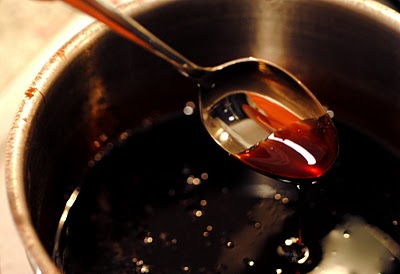
Combine the ingredients in a saucepan. Simmer over medium-low heat for about 70 minutes, until the molasses begins to thicken just slightly. Don't worry that the molasses isn't super syrupy at this point - allow it to cool for about half an hour and it will achieve the proper consistency. (I say "slightly" because if you wait to take it off the heat until it's reached molasses consistency, it will harden into a delicious pomegranate brick.) For me, by the time the mixture began to thicken it had been reduced to a little less than 1 cup. (A saucepan with measurements marked out on the side is super useful for this.) If you're adding sugar, reduce to about 1.5 cups.

Once the molasses is completely cooled, store it in the refrigerator. It will keep for up to six months. 

Mojito Madness

Some of you may not know this, but the mojito is really the drink that started it all. One summer night, circa 2008 - four good girl friends, a little bit of peppermint, a bottle of rum, and my first-ever batch of simple syrup came together to make some very, very delicious mojitos. And probably the most fun I've ever had on a week night. I was hooked. On mojitos, and on mixing drinks.


So, recently, I decided to re-visit the mojito. And, just to shake things up a little, to make a mojito variation with every kind of clear liquor in my kitchen. But first, I needed to establish a base recipe for the mojito. Now, I can be a little bit of a stickler for the rules. Especially when it comes to cocktails. I mean, classic is best, right? So I first turned to the oldest known recipe for a mojito, from a 1929 Cuban cocktail book called, appropriately, El Libro de Cocktail, and helpfully re-printed in Food & Wine magazine's "cocktails '09". Also helpfully reprinted right here:

The Original Mojito8 mint leaves
2 oz white rum
3/4 oz fresh lime juice
1 oz simple syrup
1/2 oz chilled club soda


I made a mojito, just as the 80-year-old recipe said. It was pretty, to be sure. I took many pictures of it. But I tasted it and I was...underwhelmed. I longed to return the the mojito that first captured my heart that summer night. So I made another mojito, according to my old recipe. I took a sip...delicious. Feels like the very first time.

"What is the secret of this fantastic mojito?" - you must surely be asking yourself. Two things: 1. turbinado simple syrup. Just like it sounds - simple syrup made with turbinado sugar, 1:1. 2. peppermint. Spearmint is pretty much the gold standard for mint in cocktails - every bar I've ever been to uses it for their mojitos, so that's what I used to make the classic mojito. But the drinks from the infamous Night of the Mojitos were made with peppermint, which imparts a stronger mint flavor. For the recipe printed below, I used half and half, and the result was lovely. Where can one find peppermint? I grow mine myself. You can tell the difference between the two varieties by the shape of the leaves, and, of course, by the way they smell.

Nancy's very special mojito
8 mint leaves (4 spearmint, 4 peppermint)
1.5 oz rum
.75 oz fresh-squeezed lime juice
.5 oz turbinado simple syrup
1 oz soda water

Place the mint leave in the bottom of a shaker, cover with the simple syrup, and muddle. Add the lime, rum, and 5-6 ice cubes, and shake and strain into a highball glass filled with crushed ice. Top with the soda water.

I'll be damned is this is not the best mojito I've ever had.

So now that we've established a basic recipe for the mojito, it's time to get crazy. First up, the mexi-jito - a mojito made with tequila. Luke, an inventive drinker and a particular fan of tequila, gave me the idea for this one.


Mexijito
8 mint leaves (half and half)
1.5 oz silver tequila
.75 oz lime juice
.5 oz agave nectar
1 oz soda water

Verdict: Oh, it's good. The combo of tequila and mint is wonderfully smooth, and almost, just a teeny tiny bit, reminds me of chocolate. Interesting and delicious and refrescante. Definitely worth a try.

Next: A mojito with cachaça. Since cachaça and rum are so similar, substituting cachaça for rum in a mojito seems pretty logical. Plus, the caipirinha, the most famous cachaça drink out there, is essentially just a mojito without mint, right?

Brazilian Mojito
8 mint leaves (half and half)
1.5 oz cachaça
.75 oz lime juice
.5 oz turbinado simple syrup
1 oz soda water

So...I now understand why the Brazilians don't put mint in their caipirinhas. It's because cachaça and mint is...well, kinda gross. The vegetal flavors of cachaça don't play nice with the mint like rum does. I still finished the drink -but it was my least favorite of all the alterna-mojitos. Since I played it safe with this one, next I decided to try something really unusual: a mojito with poire william eau-de-vie, a brandy made from distilled pears.


The Peppermint Pear
12 mint leaves (6 peppermint, 6 spearmint)
1.5 oz poire william eau-de-vie
1 oz lime juice
.75 oz simple syrup
1 oz soda water

I guess I shouldn't be surprised that this turned out like a mojito...that tastes like pear. Actually, come to think of it, it's more like the other way around. Even with the amount of other ingredients increased, pear is the overwhelming taste sensation here, with the mint and lime as mere grace notes. I'm still not sure how I feel about that. Suffice it to say, though, that if you like pear, and you like mojitos...you will love the hell out of this. If you're not such a huge fan of pear, but you still happen to have the brandy around , try half pear brandy, half light rum.


What about...a mojito with gin? This is another Luke invention. Once, at a party, long ago, I was making mojitos when I ran out of rum. What to doooo? Luke suggested making some with gin. I remembered them being pretty good. I remembered right.

The Gin-jito
8 mint leaves (4 peppermint, 4 spearmint)
1.5 oz gin
.75 oz lime juice
.5 oz simple syrup
1 oz soda water

It's delicious and refreshing, in that very clean, juniper-y way that gin is. And lastly: an unusual combination that totally blew my mind. Alicia was the one who suggested making a mojito with mezcal - she had something like it at the Anvil once.


The Smo-jito (It's a smoky mojito. Get it?)
8 mint leaves
1.5 oz joven mezcal
.75 oz lime juice
.5 oz agave nectar
1 oz soda water


Oh. My. Gosh. Definitely my favorite of all the mojito variations. Nice strong agave flavor, delicious smoke making love to lime and mint. I don't know what I did to deserve this, but whatever it was, I must've been very good.