The best cocktails. Cocktails and Mixes: whiskey
The best cocktails
The best cocktails
The best cocktails

Classification of Cocktails

We can meet with cocktails: Appetizers (citrus), Gastrointestinal (sweet and short), Restorative (nutrients), In the afternoon, drinks (alcoholic fruit juices).

The ornament

The ornament is the detail with which presents a cocktail, despite being edible no influence on the taste thereof. Such as the slice of lemon on the edge of a glass of Caipirinha.

Preparation

The cocktails can be prepared by different processes: Built (direct), Effervescence, Flambé, Smoothies, Mixeología, macerated, Frozzen, Removed.

Decoration

The decoration of the cocktails should be stimulating and engaging, never extravagant. In general, refreshing cocktails based on fruits allow more decorative than other types of drinks. The decor is a non-edible ornament which does not affect the flavor of the cocktail

Do the cocktails without haste.

Remember to make cocktails with care and without haste, the results will be better.

Mostrando entradas con la etiqueta whiskey. Mostrar todas las entradas

Whiskey (Whisky) Wisdom


Intro:
The world of whiskey is a complex maze of grains, flavors and distillation processes. Four countries produce distinctly different whiskies: Ireland (Irish Whiskey), Scotland (Scotch), America (Bourbon, Tennessee Whiskey, Rye Whiskey, Blended American Whiskey), and Canada (Canadian Whiskey), although whiskey is made throughout the world. This wide market ensures that almost everyone will find a brand or type that they prefer and, when asked, every whiskey connoisseur has a pointed opinion on which is the best whiskey.
Irish Whiskey:
Considered to be the father of all whiskey, Irish Whiskey is often a blend of pot-stilled malted and unmalted whiskey and column-stilled corn-based grain whiskey or, as in the case of Bushmills, triple distilled malted barley (single malt). This complex blend and the fact that Irish Whiskey malt is dried in a closed kiln, away from fire and smoke, distinguish it from its closest whiskey cousin, Scotch. Great care is taken during distillation to keep the temperature low so as not to break the delicate sweet, toasty honey flavor. It is aged in used bourbon (or various wine) barrels for at least 3 years.
  • More About Irish Whiskey
  • The History of Irish Whiskey
Scotch Whisky:
By tradition and standard, Scotch Whisky uses the spelling for whisky without the "e". The distinct smoky flavor of this distilled classic is due to the malt drying process. Part of which is done over a peat-fueled fire, which allows the smoke to come in direct contact with the malt. Although smoke does define Scotch, each region of Scotland produces a different and distinct flavor characteristics. When choosing a Scotch you will find either "single malt" or "blended" on the label along with an age statement. In the case of blended, the age is that of the youngest whiskey in the blend.
  • Single-Malt Scotch Whisky
    Single-malt Scotch is produced by a single distillery. There are around 100 distilleries in Scotland that produce a single-malt whisky and each has their own distinct flavor characteristics and notes. After double distilling the malted barley in pot stills, a 140 proof spirit called "plain British spirit" is pumped into oak casks and is aged for at least 3 years. Single malt Scotch whiskies have more flavor blended Scotch and are also used to create those blends.
  • Blended Scotch Whisky
    The majority of Scotch sold is blended and it is preferred for Scotch cocktails. The harsher tones of single-malts are dampened by blending them with grain whiskies in a cask for several months after each has been aged separately. Scotch blends are an art and each Scotch house has it's own secret recipe. While exact blends are unknown it is typical for 20-25 whiskies to be used in a blend with around 20-50% of those comprised of single malt whiskies. The higher end blended Scotch will have more single malt which leads to a deeper flavor. Blending Scotch is an art and some brands (i.e. Compass Box) focus on this.
How Smoky is Scotch?
I attended a tasting and blending seminar with Johnnie Walker's Master Blender, Andrew Ford, and in that experience we sampled a variety single malt Scotch from the different regions of Scotland, along some of the country's grain whiskey. Listed below are the different varieties ranked by their level of smokiness from least to greatest. In a good blended Scotch you will probably find a myriad of these flavor characteristics, and you can use this to gauge your personal taste when choosing a single malt Scotch. Of course, each distillery within a region will produce whiskies within a range of smokiness because it is the amount of peat used to "smoke" the barley that truly determines how much of that characteristic comes through, those below are generalities. More about Scotch Whisky Regions
  • Grain Whiskey - Light, vanilla notes and not much flavor. The blender often uses around 50% of this aged whiskey (at least as old as the bottle's label indicates) distilled in continuous column stills to add sweetness and drinkability to the single malts.
  • Lowland Malt - A light flavor with a touch of smoke that takes a well-tuned pallate to recognize. Typically aged in used bourbon barrels, this Scotch has sweet vanilla characteristics
  • Speyside Malt - This style remains light, but has fruity notes - that of apple and pear - with grassy tones and little to no smokiness. The fruit tones are sometimes imparted from aging in used Scotch casks, or "refill" casks, and forms a nice background for blends.
  • Sherry Cask Malt - Due to this whiskey's aging in used sherry casks this style is fruiter, but finds a balance with a slightly more intense smoke. It is a long lasting, dry fruit with a rich, full body.
  • Highland Malt - Now we're getting some smoke. This Scotch is characteristically warm and robust, and the location of the distilleries add a salty, "maritime" flavor aspect to the whiskey.
  • Island Malt - Ford calls this amount of smoke "Johnnie Walker Black Label territory." It has a hearty peat and is considerably smoky although within reason. The finish is most remarkable with notes of pepper.
  • Islay Malt - Although this usually the lightest single malt in color because it is often aged in refill casks. Islay's are famous for their smoke, especially their ember-like finish that some pallates can handle and some cannot. It is very warm and intensely smoky with a dry finish. More about Islay Scotch

Pink Sage

I have become the sort of person who googles things like "sage flavor pairings". Because I recently bought a sage plant, and if I can't make it into a drink it is basically useless to me. Some suggestions were: sage and plums. Interesting. Sage and rye whiskey. More interesting. But what about...sage and plums and rye whiskey? The plot thickens.

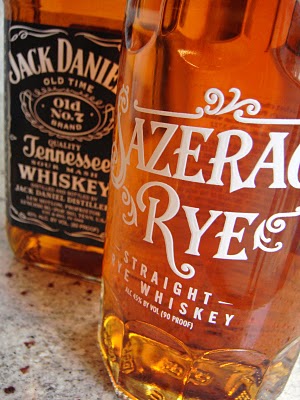
So here's what you need to know about rye whiskey: Rye whiskey (sometimes referred to simply as "rye") is kind of a big deal. It shows up in a lot of old cocktail recipes, and has recently been re-discovered by the cocktailing elite. (Apparently rye whiskey has a long and storied history - according to this guy, it was distilled by George Washington at Mount Vernon.) It tastes like whiskey but different, i.e., in rye, the spicy flavors present in the whiskey are sharper and more distinct. It practically begs to be paired with bitters, which is probably why the most famous cocktail made with Rye Whiskey, the sazerac, includes a healthy dose of Peychaud's. (Sazerac also happens to be the brand name of a kind of rye.)


I bought my first bottle of rye whiskey a couple weeks ago and set to work on a sage-y cocktail. Here's what I came up with:

The Pink Sage
3/4 of a juicy, ripe red plum
4-5 sage leaves (thank you, backyard herb garden)
.5 oz sugar syrup
.25 oz lemon juice (make it fresh!)
2.0 oz rye whiskey (2.5 if you want the taste of the rye to come through more strongly.)

Add the plum and sage to the shaker. You will want to muddle this one rather vigorously - it may help to add the sage and half the plum, muddle, and then add the rest of the plum and then muddle again. Fill the shaker with ice and then add the remaining ingredients. Shake and strain into a cocktail glass.


Verdict: Wow. This is very, very good. The plums, sage and rye are such a natural pairing that it's hard to tell where one flavor ends and another begins. It's sweet and smooth and herbal and complicated. Adding a couple dashes of Peychaud's bitters will add an interesting, licorice-y dimension to it. (Sounds weird, but - try it.) Just don't drink it too fast. Rye whiskey is almost 50 percent alcohol. I'm gonna go sit down.

The Spice Island Iced Tea

Is it mixology Monday again? How the hell did that happen? Seems like just yesterday I was boozing it up with the ghost of Ernest Hemingway. This month's theme, with your host Chris Amirault over at eGullet, is "Like That? You'll Love This!" The goal, as described here, is to introduce cocktail novices to fancy drinkin by using a "gateway" cocktail that's a schmancy twist on a drink they already know and love. I thought this would be the perfect opportunity to take a second look at one of the cocktails most reviled by serious mixologists: the Long Island Iced Tea.


Why is it that the cocktailing elite disdain the Long Island Iced Tea? Here, as I see it, are two reasons:

1. Most Long Island Iced Teas that you order at bars are unbearably sweet.
2. A Long Island Iced Tea (as you will see if you look at the recipes below) contains a great deal of booze. Yet somehow, it tastes delicious. Generally, the sort of people who order Long Island Iced Teas are those who don't like the taste of alcohol, but want to get drunk very quickly. This is abhorrent to the mixology elite, because A. they see booze as its own end, rather than a means to an end, which is: drunkenness, and B. they love the taste of alcohol (see "A") and don't understand why anyone would want to drink booze that doesn't taste like booze.

So what, exactly, does a Long Island Iced Tea taste like? I'm reminded of a conversation I had with a friend of mine in high school. She asked me: "Why do you love Bagel Bites so much? (Because I used to really, really love Bagel Bites.) They don't taste like pizza, and they don't taste like bagels." I thought about it for a minute, and I realized - she was right. Bagel Bites don't taste like pizza, or bagels - they taste like Bagel Bites. And Bagel Bites taste awesome. In much the same way, a Long Island Iced Tea does not taste like tea. It doesn't even taste like alcohol at all. A Long Island Iced Tea tastes like...a Long Island Iced Tea. I guess you will just have to try it for yourself. (Just don't operate any heavy machinery for a while.)

In my mind, the LIT deserves a little bit of respect. ("LIT" is Will's acronym for this particular drink, since saying "Long Island Iced Tea" over and over again is a bit clunky. Technically, it should be LIIT, but that's even clunkier. Also, Will's acronym accurately describes what you will be if you consume just one of these.) You may not like the kind of people who drink it, but you have to concede that what it does, it does remarkably well. In fact - I would go so far as to say that the LIT is magic. Making a glass full of hard liquor taste like something you'd get at Sonic is nothing less than a feat. And there's nothing like a pitcher of LITs to bring the party.

The Long Island Iced Tea
1 oz vodka
1 oz gin
1 oz rum
1 oz tequila
1 oz cointreau (Or triple sec. but really...cointreau makes everything better. It's so expensive, it damn well ought to.)
1.25 oz fresh-squeezed lemon juice (did you hear the part where I said fresh squeezed?)
1 oz simple syrup
.5 oz coca-cola

Build over ice in a pint glass. Stir before serving. I go a little easy on the vodka and gin - more like 7/8 oz.
One night while hanging out at Revolution (a neat little coffee shop/bar in Bryan) with Alan and Jen, I overheard the bartender describing her particular variation on a Long Island Iced Tea. She called it New York Mother (word I decline to print here, based on the slim possibility my mother will ever read this blog). It's just like a Long Island Iced Tea, only substitute whiskey and amaretto for the tequila and rum. I couldn't wait to get home and try this. I did, and the result? Huge success. My friends loved it. I've honestly never made a plain old Long Island Iced Tea ever again. You get the same what-is-it taste like with a traditional LIT, with a little bit of that warm, sweet brown-liquor flavor from the whiskey and amaretto. (And I sure do love me some whiskey.)


The Staten Island Ferry

(Credit for this much more mother-friendly name goes to Kendra.)
1 oz vodka
1 oz gin
1 oz whiskey
.5 oz amaretto
1 oz cointreau
1.25 oz fresh-squeezed lemon juice
.5 oz simple syrup
.5 oz coca-cola
The appeal of the Staten Island Ferry, of course, is that, like its predecessor, it packs a great deal of booze into a surprisingly palatable drink. This makes a great pitcher drink at a certain kind of party...just increase all the measurements to cups (1 oz = 1 cup and so forth), and add a handful of ice to the pitcher and stir to mellow out all the alcohol. Floating slices of lemon add a particularly nice touch, and will make your pitcher look particularly innocuous and Martha Stewart-y. (I mean - would Martha Stewart ever get you drunk? (Actually, I don't know how to answer this question, since Martha Stewart is a very multi-faceted person. But if Martha Stewart is drunk...well, I want to be there for that show.))
But you know me. A good drink, like a good work of art, is never truly done. Lately I have completely fallen in love with St Elizabeth's Allspice Dram. It is like the St. Germain of winter - I want to put that shit in everything. And since we already knew that Allspice Dram complements warm, bourbon-y flavors...why not try it in a Long Island? Or rather, in a Staten Island.

I am a cocktail freaking innovator. A cocktail Christopher Columbus. And Magellan. All rolled into one.


The Spice Island Iced Tea
1 oz vodka
1 oz gin
1 oz whiskey
.5 oz amaretto
1 oz cointreau
1.25 oz fresh-squeezed lemon juice
.5 oz simple syrup
.5 oz coca-cola
1/4 oz St. Elizabeth's Allspice Dram

For those of you playing along at home, those are the same ingredients from the Staten Island - just add the Allspice Dram.

You guys - this is good. It's got the magic LIT taste, plus whiskey warmth, plus a little bit of spicy allspice dram goodness. I don't know if the Long Island Iced Tea will ever be truly acceptable to the cocktailing elite, but here's a drink that is a step in the right direction. 

St. Michael's Irish Americano

Ingredients

  • 2 (1.5 fluid ounce) jiggers espresso coffee
  • 2 (1.5 fluid ounce) jiggers Irish whiskey
  • 1 tablespoon white sugar
  • 1 tablespoon heavy cream
  • 6 fluid ounces hot water
  • 2 tablespoons whipped cream, garnish

Directions

  1. Pour the espresso into your favorite mug, add Irish whiskey, sugar, tablespoon cream and hot water. Garnish with a dollop of whipped cream.

Triple Fionn MacCool


Ingredients

  • 2 fluid ounces Irish cream liqueur
  • 1 fluid ounce Canadian rye whiskey
  • 1/4 cup cold milk
  • 1 pinch cinnamon
  • 2 cups ice cubes

Directions

  1. In a cocktail shaker, shake together Irish cream liqueur and Canadian rye whiskey with several cubes of ice. Strain into a glass filled with ice cubes. Top off with milk and a dash of cinnamon. Give it a gentle stir and serve.

True Manhattan


Ingredients

  • 2 fluid ounces whiskey
  • 1/2 fluid ounce sweet vermouth
  • 1 dash bitters (optional)
  • 1 cup ice cubes
  • 1 maraschino cherry for garnish

Directions

  1. Place ice in a mixing glass. Pour in vermouth, then whiskey, and stir. Strain into a cocktail glass. Add a dash of bitters if desired, and garnish with a cherry.

Uncommonly Clyde


Ingredients

  • 1/2 cup crushed ice
  • 1 tablespoon cranberry sauce (see below)
  • 2 fluid ounces bourbon whiskey
  • 1/2 teaspoon brandy-based orange liqueur (such as Grand Marnier®)
  • 2 dashes aromatic bitters
  • 1 fluid ounce cold water

Directions

  1. Muddle the crushed ice and cranberry sauce in a rocks glass until the ice has been tinged red. Pour in the whiskey, orange liqueur, bitters, and water. Stir and serve.

Whiskey Paralyzer

Ingredients

  • 1 cup ice cubes
  • 1 fluid ounce Canadian whiskey, such as Crown Royal™
  • 1 fluid ounce Kahlua or other coffee flavored liqueur
  • 1/2 cup root beer
  • 2 fluid ounces milk

Directions

  1. Fill a highball glass with ice. Pour in the Canadian whiskey, coffee liqueur and root beer. Slowly pour in the milk so it does not curdle. Stir gently and enjoy immediately.

Whiskey Slush

Ingredients

  • 1 (12 fluid ounce) can frozen lemonade concentrate
  • 1 (6 ounce) can frozen orange juice concentrate
  • 2 cups strong brewed black tea
  • 1 cup white sugar
  • 2 cups whiskey
  • 7 cups water
  • 1 liter ginger ale soda
  • 2 lemons - cut into wedges, for garnish

Directions

  1. In a large plastic container combine lemonade concentrate, orange juice concentrate, tea, sugar, whiskey and water. Mix well and freeze for 24 hours.
  2. Scoop into a tall glass, 3/4 full, and pour ginger ale to fill the glass. Stir and garnish with lemon wedges.

Rob Roy


Ingredients

  • 1/4 cup blended Scotch whiskey
  • 2 tablespoons sweet vermouth
  • 4 ice cubes
  • 2 dashes Angostura bitters
  • 1 maraschino cherry

Directions

  1. Pour Scotch and vermouth into a glass with ice cubes. Shake in bitters, stir, and garnish with a maraschino cherry.

Rye Manhattan


Ingredients

  • 1/4 cup rye whiskey
  • 2 tablespoons sweet vermouth
  • 2 dashes Angostura bitters
  • 1 maraschino cherry

Directions

  1. Fill a cocktail shaker with ice cubes. Pour in the whiskey, vermouth and bitters. Shake until frosty, about 15 seconds then strain into a Manhattan glass and garnish with a maraschino cherry.

Sazerac

Ingredients

  • 1/4 teaspoon anise flavored liqueur
  • 1/2 teaspoon white sugar
  • 1 teaspoon water
  • 2 dashes Peychaud bitters
  • ice cubes
  • 1/4 cup rye whiskey
  • 1 lemon twist, for garnish

Directions

  1. Store a cocktail glass in the freezer for 15 to 20 minutes before making the cocktail.
  2. Pour the anise flavored liqueur into the frosted glass and turn to coat the sides. Dump excess liqueur in the sink (or drink it!). Add sugar, water and bitters to the glass, stirring to dissolve. Strain into the glass and pour in the rye. Stir and garnish with a twist of lemon.

Scofflaw

Ingredients

  • ice cubes
  • 1 1/2 fluid ounces rye whiskey
  • 1 1/2 fluid ounces dry vermouth
  • 3/4 fluid ounce fresh lemon juice
  • 1 dash grenadine
  • 1 dash orange bitters

Directions

  1. Chill a martini glass in the freezer. Add ice to a cocktail shaker. Pour in whiskey, vermouth, and lemon juice. Add a dash of grenadine and a dash of bitters. Shake well, then strain into the chilled glass.

Seventh H'Evan

Ingredients

  • 4 ice cubes
  • 2 (1.5 fluid ounce) jiggers bourbon whiskey
  • 1 (12 ounce) can chilled diet lemon-lime soda

Directions

  1. Fill a tall glass with ice cubes. Pour in the whiskey and top off with lemon-lime soda. Stir gently and serve immediately.

Shaggy's Canadian Driver

Ingredients

  • 1 (1.5 fluid ounce) jigger Canadian whiskey
  • 5 fluid ounces orange juice

Directions

  1. Pour whiskey over ice in a highball glass. Fill glass with orange juice, stir and serve.

Shaggy's Manhattan

Ingredients

  • 1 fluid ounce sweet vermouth
  • 3 fluid ounces bourbon whiskey
  • 2 dashes bitters
  • 2 maraschino cherries

Directions

  1. Fill a cocktail shaker with ice. Pour in the sweet vermouth and whiskey and splash on 2 dashes of bitters. Shake while counting to 30. Pour into 2 cocktail glasses, garnish each with a cherry and serve immediately

Lynchburg Lemonade

Ingredients

  • 1 cup ice cubes
  • 1 (1.5 fluid ounce) jigger Tennessee whiskey
  • 1 (1.5 fluid ounce) jigger sweet and sour mix
  • 1 (1.5 fluid ounce) jigger triple sec (orange-flavored liqueur)
  • 3/4 cup chilled lemon-lime soda

Directions

  1. Fill a tall glass with ice cubes and pour in the whiskey, sweet and sour mix, triple sec and lemon-lime soda. Stir with a straw and enjoy!

Mint Juleps


Ingredients

  • 2 cups water
  • 2 cups white sugar
  • 1/2 cup roughly chopped fresh mint leaves
  • 32 fluid ounces Kentucky bourbon
  • 8 sprigs fresh mint leaves for garnish

Directions

  1. Combine water, sugar and chopped mint leaves in a small saucepan. Bring to a boil over high heat until the sugar is completely dissolved. Allow syrup to cool, approximately 1 hour. Pour syrup through a strainer to remove mint leaves
  2. Fill eight cups or frozen goblets with crushed ice and pour 4 ounces of bourbon and 1/4 cup mint syrup in each. (Proportions can be adjusted depending on each person's sweet tooth). Top each cup with a mint sprig and a straw. Trim straws to just barely protrude from the top of the cups. Serve juleps on a silver platter.

Original Irish Cream

Ingredients

  • 1 cup heavy cream
  • 1 (14 ounce) can sweetened condensed milk
  • 1 2/3 cups Irish whiskey
  • 1 teaspoon instant coffee granules
  • 2 tablespoons chocolate syrup
  • 1 teaspoon vanilla extract
  • 1 teaspoon almond extract

Directions

  1. In a blender, combine heavy cream, sweetened condensed milk, Irish whiskey, instant coffee, chocolate syrup, vanilla extract, and almond extract. Blend on high for 20 to 30 seconds. Store in a tightly sealed container in the refrigerator. Shake well before serving.

Portuguese Licoro

Ingredients

  • 1 quart whiskey
  • 1/2 lemon
  • 4 1/2 cups white sugar
  • 1 quart milk
  • 6 (1 ounce) squares unsweetened chocolate
  • 2 vanilla beans

Directions

  1. In a gallon container combine whiskey, lemon, sugar, milk, chocolate squares and vanilla beans. Keep at room temperature for 10 days, stirring once a day.
  2. After 10 days, remove the lemon half, chocolate and vanilla beans. Insert a coffee filter into a large funnel. pour the liquid through the filter into a gallon jug. Change filter as needed. A clear yellow solution should result. This liqueur can be stored in a sealed bottle at room temperature.